


I have been watching the AI search conversation for a while now, and most of it has been noise. Predictions. Hot takes. People telling you the sky is falling or that everything is fine creating lots of overwhelming feelings. Not a lot of actual data.
So when Shopify published real behavioral data from across their platform last week, I paid attention. And honestly, some of what they found stopped me in my tracks.
Let me walk you through it, because I think the implications are bigger than the headline numbers suggest.
The Numbers
Shopify pulled conversion and traffic data for Q1 2026, specifically looking at shoppers who arrived from AI tools like ChatGPT, Perplexity, Google Gemini, and similar platforms. Then they compared that behavior to standard organic search traffic.
Here is what they found:
AI-referred shoppers converted at nearly 50% higher rates than organic search visitors. They spent 14% more per order. And more than half of them landed directly on a product page, compared to only about 20% of organic search visitors.
On top of that, referral sessions from AI tools grew more than 8x year over year on Shopify stores. Orders from those sessions grew nearly 13x.
Now, before you close this tab thinking this does not apply to you yet, I want to address that. Organic search still sends way more total traffic than all AI platforms combined. If you pull up your own analytics right now, AI is probably a tiny slice of your referral sources. That is not a reason to ignore it. That is actually the point.
Why Are These Shoppers Converting So Much Better?
This is the part I keep coming back to, because once you understand it, the whole picture clicks.
Think about how a Google search used to play out. Someone types in “best skincare routine for oily skin” and gets a page full of links. They click on a blog post, then another one, then maybe a Reddit thread, then maybe your store. They browse around, leave, and maybe come back in a few days when they are actually ready to buy. That whole journey, from curiosity to purchase, could take a week and touch a dozen different websites.
Now think about what happens when someone asks ChatGPT or Perplexity the same question. The entire research process happens inside that one conversation. The AI narrows things down, compares options, and points them toward specific products. By the time they click over to your store, they are not browsing. They already made up their mind. They just need to check out.
And here is the thing: Google is not sitting still while this happens. AI Mode is already rolling out, and it works the same way. You search, Google synthesizes an answer, and if a product gets recommended, the person clicking through has already been pre-sold. The old experience of ten blue links and a browse session is fading out across all search, not just the standalone AI tools.
That is why they land on product pages instead of homepages. That is why they convert at higher rates. That is why they spend more. They are not shoppers in research mode. They are buyers in checkout mode.
Shopify calls this “journey compression,” and I think that is a useful way to think about it. The AI does the consideration work that used to happen across your site, and delivers someone who has already decided. You just have to close the deal.
What You Should Actually Do About This
None of this requires a big budget or a complete overhaul. A lot of it is work you should be doing anyway. But knowing that AI buyers land differently than search buyers changes where you focus first.
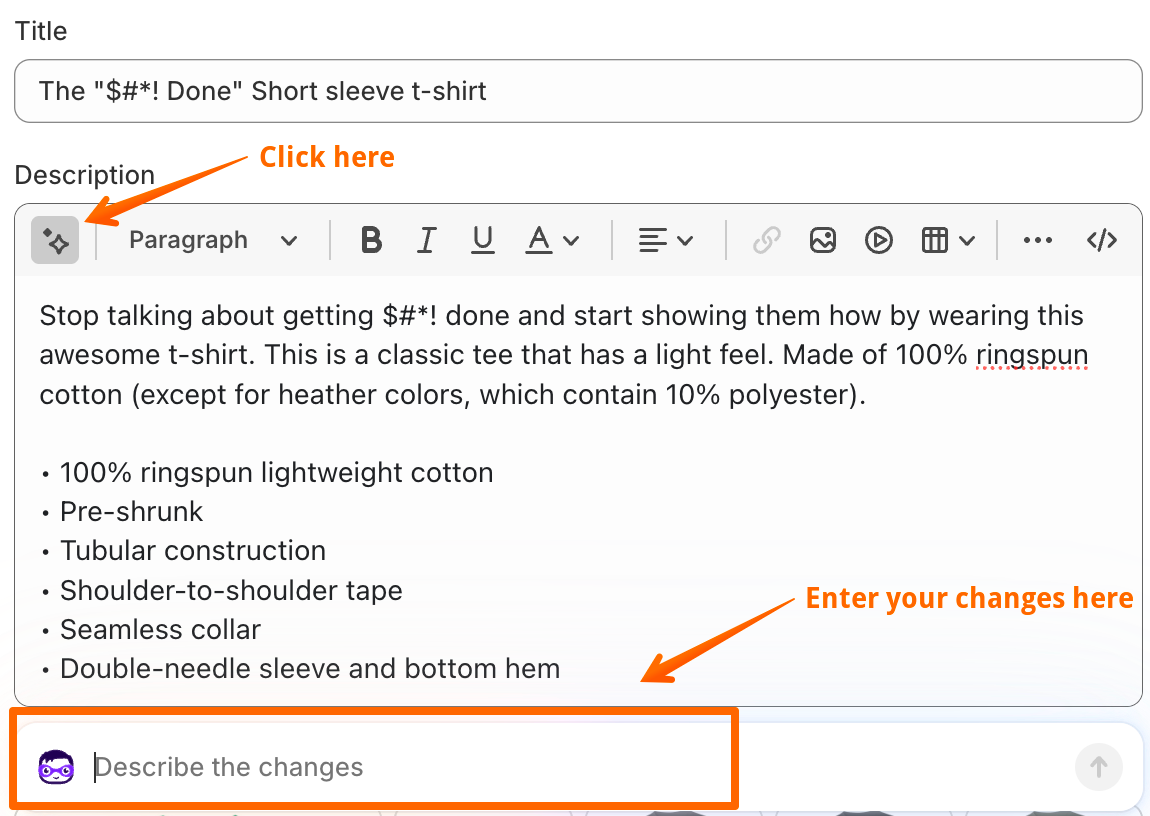
Fix your product pages first. If more than half of AI-referred visitors land directly on a product page, your product page is your storefront. Not your homepage. Not your about page. Your product page. And if your descriptions are thin, your specs are vague, or your copy is just stuffed with keywords, you are losing buyers at the exact moment they are most ready to purchase. Write for the person who already knows what they want and just needs confirmation that yours is the right one. If you are on Shopify, you already have a tool for this built right in. Open any product in your admin, click the magic wand icon in the top left corner of the description editor, and Shopify’s AI will draft or rewrite your copy. There is also a “Describe the changes” prompt bar at the bottom where you can give it specific direction, like “add fabric and fit details” or “write this for a buyer who is comparing options.” It is not a magic bullet, but it removes the excuse of not having time to do this across your whole catalog.
Think about what the AI is reading when it crawls your site. These tools are constantly evaluating your pages to decide who to recommend. They are looking at how clearly your products are described, how your content is structured, whether your data is clean. This is not about tricks or hacks. It is about having a site that is actually easy to understand, for both humans and machines. A few tools that show you exactly how AI sees your brand right now:
Build your reputation in the places AI pays attention to. AI platforms do not just look at your website. They pull from reviews, editorial coverage, Reddit threads, comparison articles, community posts. If your brand is not showing up in those conversations, you are invisible to the tools making recommendations. The only way to change that over time is to build something worth talking about and make it easy for people to talk about it.
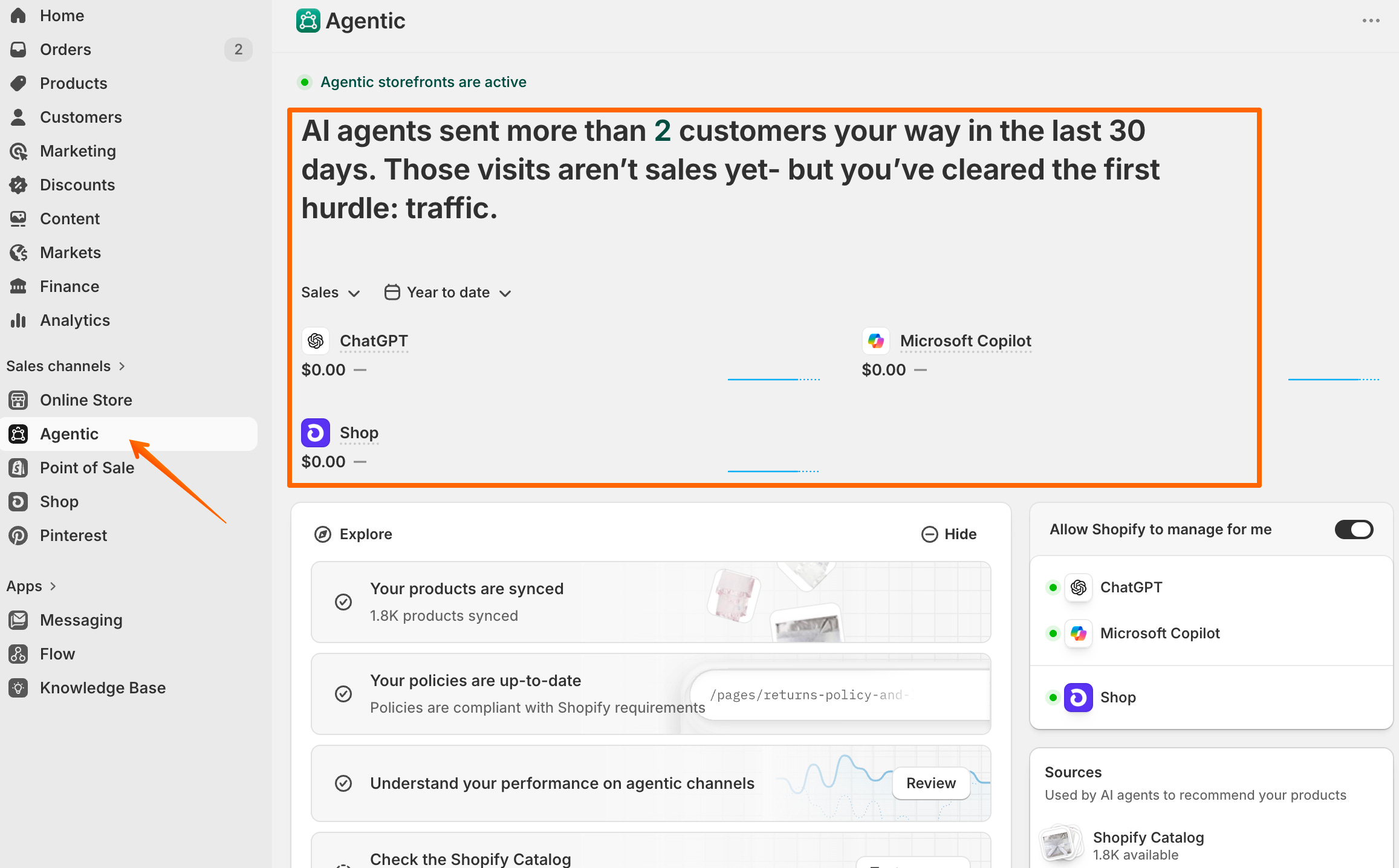
Turn on the Agentic sales channel in your Shopify admin (might already be on). Shopify has a dedicated sales channel called Agentic that shows you exactly which AI platforms are sending customers your way and how much revenue each one is generating. In your admin, look for Agentic in the left sidebar under Sales Channels. Once you are in, you will see a live breakdown of traffic and sales from ChatGPT, Microsoft Copilot, and Shop, your product sync status, and whether your policies meet the requirements AI tools use to evaluate your store. It also shows you the sources AI agents are pulling from when they recommend your products, which is useful to know. If you have not activated it yet, do that today. Even if the numbers are small right now, this is your baseline, and you want to be tracking it from here forward.
Keep doing the SEO work. This is not either/or. A lot of AI tools pull from the same web indexes that power Google rankings. Your search ranking feeds your AI visibility. The investment goes both directions at once.
I Have Seen This Before
I have been doing this long enough to remember when mobile traffic was a rounding error in most stores’ analytics. I watched merchants treat it as a footnote while a smaller group quietly built mobile-first experiences. By the time mobile crossed its tipping point, the gap between those two groups was not closeable in any reasonable time frame.
The same thing happened with social commerce. Same pattern. Early movers built audiences and infrastructure before the channel was obvious. Late movers arrived on level ground, competing for attention in a space that had already been claimed.
And keep in mind, this is not just about ChatGPT or Perplexity stealing share from Google. Google is becoming an AI tool itself. AI Mode is already changing how search results look and how people interact with them. This shift is not coming from one direction. It is happening across every major platform people use to find products. The stores that treat this as a niche channel are missing what is actually going on.
The window is open. The work is mostly work you should already be doing anyway. The only variable is whether you treat this as urgent or optional.
I know which side I am betting on. 😉
Source: Shopify Enterprise Blog, May 2026
Join the Ecommerce Revolution content, and coaching to launch and grow your ecommerce business.
Great piece Ramin. The section that starts with “This is the part I keep coming back to, because once you understand it, the whole picture clicks.” Is gold. Well done